
Revisiting The Beach
Defending a movie that got an unnecessarily hard time.

Note: This newsletter contains spoilers. If you haven’t watched The Beach but plan to, I suggest you move this straight to trash or save it for another day.
The Beach is, without question, one of my favourite movies of all time. It has an incredible story, soundtrack, and cast, and is one of the only movies I find myself revisiting again and again.
However, critics put it at just 21% on Rotten Tomatoes. They call it lazy, unsatisfying, and “an incomprehensible mess.” It remains, for a lot of people, unremarkable and forgettable.
So, 25 years after its release, I figured it was time to write about why I believe it isn’t any of those things. It’s something I’ve been itching to do for a while, both as an excuse to just talk about it and to try and untangle what it is about The Beach that’s got me so gripped.
Here goes.
Released in 2000, The Beach was written by Alex Garland and directed by Danny Boyle – the same minds behind 28 Days Later. It’s based on a book of the same name by Garland that’s different, but stands alone in its own right. It’s also, interestingly, a movie Boyle himself has mixed feelings towards, saying it was his “least enjoyable personal experience on a film.”
The movie’s premise centres on Richard, an American backpacker who lands in Bangkok chasing the idea of escape. There, he meets French couple, Etienne and Francoise, and the deeply troubled Daffy.
Daffy tells him about a beach; a hidden island paradise home to a handful of people protective about keeping it secret. Then Daffy commits suicide, but not before leaving Richard a map.
And so the scene is set. Richard sets off with the couple in search of the beach. They find it, and the rest of the movie becomes a gripping exploration of humanity’s relationship with paradise, and how far people will go to protect it.
As a movie, The Beach has a lot going for it. Its cast is led by Leonardo DiCaprio coming off the success of Titanic, Robert Carlyle of Trainspotting, and Tilda Swinton, a titanic actor in her own right. Its soundtrack (specifically Porcelain by Moby and Pure Shores by All Saints) doesn’t just capture the mood of The Beach, but did so much great marketing it’s what people seem to remember most about it.
Its location, filmed on the island of Ko Phi Phi Le in Thailand, looked so good on those grainy 2000s cameras it was forced to close for four years because tourism after The Beach’s release caused such devastating environmental damage. For a film that puts a dark and unforgiving lens on tourism, it’s the only thing that leaves a sour taste in the mouth.
Then there’s the story itself. A tale with ups and downs, shark attacks, weird survival scenarios, and moments of love, lust, greed, secrecy, desperation, community, rejection, and the unsettling lengths people will go to keep idealism intact.
But alongside all these good ingredients, and all the moment-to-moment action, there’s one thing that makes The Beach a success for me, and that’s the feeling it elicits in my soul. It’s a very specific sensation that, even after watching it multiple times, I still can’t put my finger on.
The closest thing I can compare it to is nostalgia; a raw, real feeling that has, like the film, grown more complex and meaningful as I’ve got older.
The Beach bottles the rush of chasing freedom, the possibility of stepping out of your comfort zone, and the excitement of falling in love with something new. It puts you in a place that makes you believe that anything is possible.
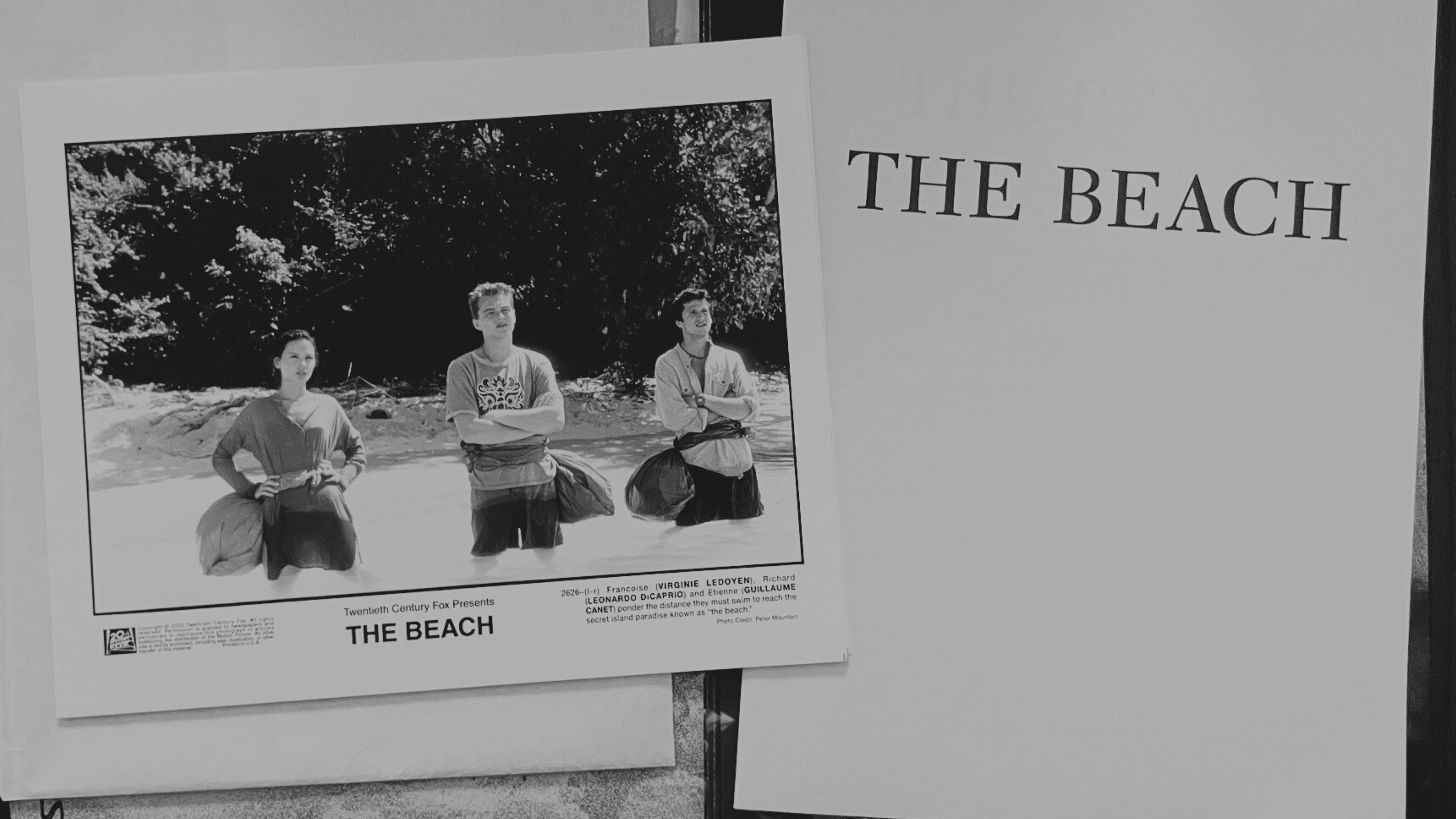
And then it hits you like a gut punch, revealing nostalgia’s other side.
The film ends and you’re left drowning in this reminder that the paradise you imagined is exactly that – imagined – and the freedom you were so excited about is complex, layered, and nuanced.
The Beach made me understand that while we all define paradise as something different, and we’re all navigating our lives looking for it, paradise is a notion that doesn’t work in large doses.
It’s an emotional reminder that all good things have to end, because paradise is impermanent. It’s not a place, person, or destination. It’s a fleeting moment that you experienced, fell in love with, but have to let go. That’s how it works. Those are the rules. You don’t get to keep the things that made it feel good. You don’t get to keep the people that made it happen. Paradise is not designed to last forever.
While that might seem sad and unfair, it’s not. Instead, it offers this odd comfort that says you are going to get older. Life is going to happen. You’re going to change and, as you do, so will your understanding of paradise, and the dawning realization that you may have already experienced it.
That, for me, is what makes The Beach a masterpiece. It makes you realize that paradise does, in fact, exist. What’s broken is how we choose to define it.
Have you watched The Beach? Did you love it, loathe it, or feel it was forgettable? What books, movies, video games, or stories have, for you, bottled a feeling? I’d love to talk about it.
Before you go
My latest book, The Flowers at Flood House, is out now. It’s a horror novella about memories, grief, and lots of flowers. Feel free to check out reviews on Goodreads or click the button below to grab a copy.
If you want to read some of my fiction on Substack, you can check out Lightbulb, 483, A Gentle Rain, Cold House, or Blood Orange, Vanilla, and Musk.
If you want to connect, I love hearing from readers. I keep an Instagram updated and post regularly to Threads and Notes. You can also find me on TikTok.
/ JJW
I loved the book and was so excited for the movie…. but still have never gotten around to watching it. Will have to remedy that sooner vs. later because I was feeling all nostalgic before you even mentioned that word.