
Mexican Gothic
And other books you should be reading.

March was Women In Horror Month, and while horror books authored by women should be a to-read pile mainstay all year round, it’s as good a reason as any to talk about some of my favourites.
So, here they are.
Expect haunted houses, the supernatural and harrowing accounts of grief.
‘You’re very silly or very brave, living in a haunted house.’
When I picked up Silvia Moreno-Garcia’s Mexican Gothic, I knew I was in for a story about a haunted house. What I didn’t expect was how many twists and turns that haunted house would deliver.
The novel starts with a letter calling Noemí Taboada to High Place, a remote house in the Mexican countryside where her cousin is in desperate need of help. When she arrives she starts to unravel not just why her cousin needs her, but what it has to do with the interesting cast of characters she’s staying with.
As well as offering a perspective on post-colonialism’s chilling impact on the country, Mexican Gothic is steeped in atmosphere. Whether it’s descriptions of the landscape, the house or what’s lurking on its grounds, every page oozes mood. For those who like their horror gloomy, Mexican Gothic is worth checking out.
‘The world was fragile. One day, growth; the next day, kindling.’
Before I started reading Alma Katsu’s The Hunger I was somewhat familiar with the tragic and true story of the Donner Party, a group of Americans who left the Midwest for California in 1846 that, due to poor planning and unexpected weather, became stranded in the Sierra Nevada mountains.
As temperatures dropped and conditions became desperate, some resorted to cannibalism to see it through. Still today, it’s regarded as one of California’s most disturbing stories.
In The Hunger, Katsu uses the truth of that story as a foundation, but decides to up the ante by introducing something sinister and supernatural hunting the party at the same time.
Not only did it feel fascinating in its depth of research, meeting real people and giving an account of the route and struggles they encountered, but I enjoyed the exploration of how far desperate people will go in desperate situations, especially when we know it’s doomed from the start.
‘He realised that he and Kaya both believed in ghosts, at least for tonight.’
This is the first I’ve read from Tananarive Due but I’ll make sure it isn’t the last. The Between is a novel about Hilton and the grandmother who gave her life to save him from drowning when he was a boy.
What follows are the events 30 years later. Not only does Hilton have to face what happened on that day through a series of vivid nightmares but his wife, a Florida judge, is being threatened with racist hate mail from someone she prosecuted in the past.
Alongside diving into themes of marriage, grief and family, what Due does so well with The Between is show the lethality of hate. While it might be set to a backdrop of supernatural forces, ghosts and bad dreams you can’t shake, racism is the true horror here.
‘She watched until her eyes burned, but he never reappeared.’
Laurel Hightower’s Crossroads will stay with you long after you’ve turned the final page. When I closed the cover the other night, I sat for a minute just thinking. I needed a moment to let it sink in.
It follows a mother who loses her son to a car accident, and asks how far she’s willing to go to bring him back. It’s raw, painful and, in its own way, strangely uplifting to see how deep rivers can run between family.
I’m in a privileged enough position to say I’m yet to experience grief. The true, inevitable kind.
What Crossroads does in its portrayal of that emotion was as humbling as it was disturbing. At times this book is hard. At times it’s tough. But I promise you every word is worth it.
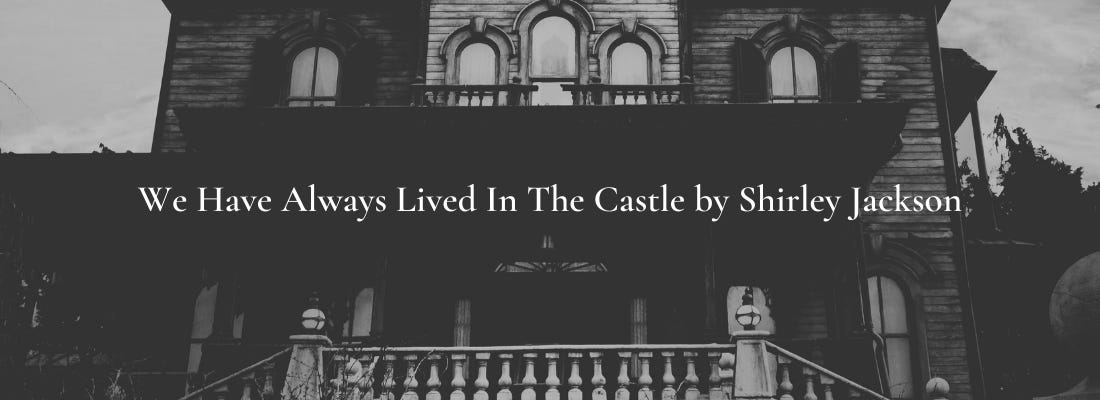
‘We eat the year away. We eat the spring and the summer and the fall. We wait for something to grow and then we eat it.’
While We Have Always Lived In The Castle was Shirley Jackson’s final novel, it was the first I read, and it ignited something in me no other book had done before.
It’s the story of the Blackwood family, living in a house that’s cut itself off from the surrounding village. What follows is a tale that uncovers the reason for their isolation, talks of sugar bowls laced with poison and explores the synergy between fear and family.
What’s also special about this one, at least for me, is that it feels so autobiographical, from the setting and the claustrophobia to Jackson’s understanding of language. And, as is the case with much of Jackson’s work, it’s not what’s written in the lines that scares you, but the meaning nestled in between.
We Have Always Lived In The Castle is nothing short of a masterpiece.
Before you go
I live in other corners of the internet. Every so often, I post new micro-fiction on TikTok. I also attempt to keep an Instagram updated and tweet every now and then.
/ JW